
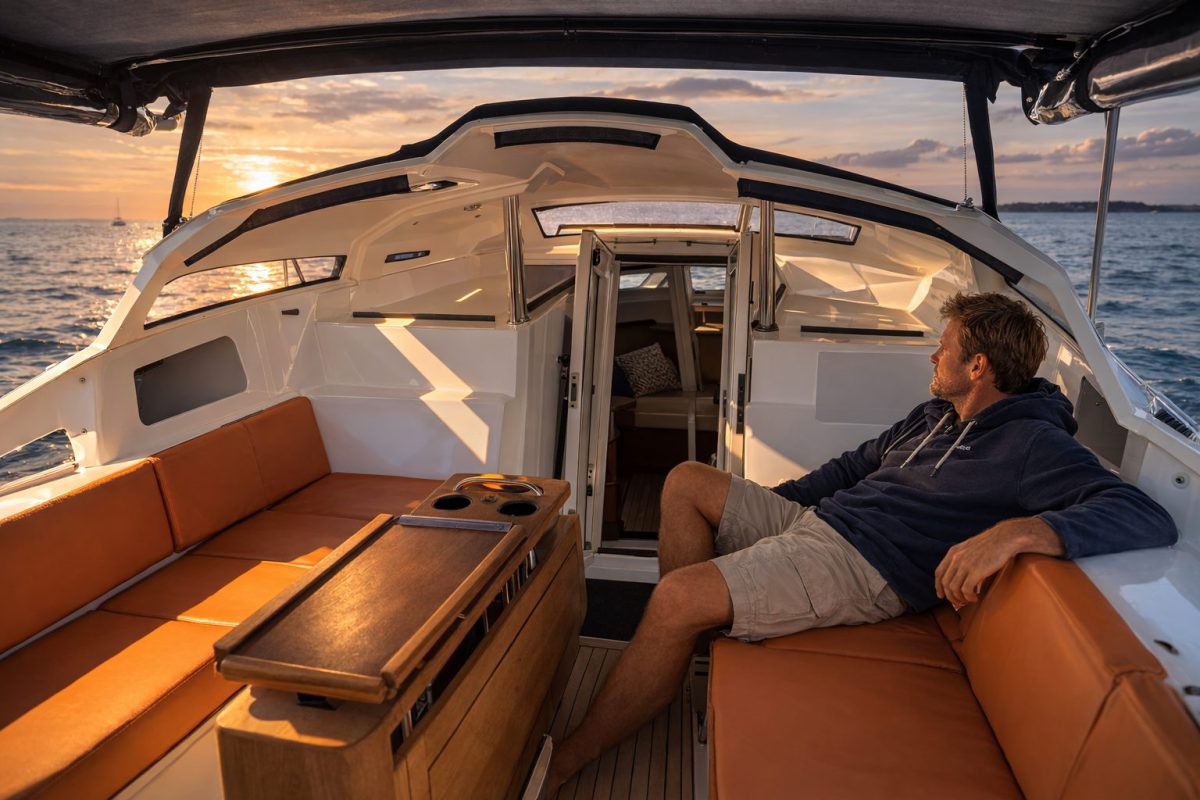
There is a particular calm you often notice among people who spend a lot of time at sea. It is not loud confidence and it is rarely dramatic. Instead, it appears quietly—in the way a sailor studies the horizon, adjusts a sail without hurry, or sits comfortably in silence while the boat moves steadily across the water.
This calm presence is often part of what can be described as a sailor mindset lifestyle. It is not simply about knowing how to operate a sailboat. Over time, sailing shapes the way a person thinks, reacts, and moves through uncertain situations.
For many sailors, the sea gradually teaches patience, simplicity, and quiet confidence. These qualities become part of daily life, both on the water and on land. Over time, many people who spend years at sea naturally develop what can be described as a sailor mindset lifestyle — a calm and observant way of approaching both sailing and everyday life.
Confidence Built Slowly
Modern life often rewards speed, quick reactions, and constant activity. Sailing works differently.
At sea, progress depends on wind, weather, and careful timing. Conditions change gradually, and the best decisions often come from observation rather than immediate action.
Because of this, sailors learn to operate with incomplete information. A wind shift may appear in the distance. A cloud line might signal changing conditions. The boat moves forward because of many small adjustments rather than one dramatic maneuver.
Over time, these experiences create a type of confidence that feels steady rather than loud. Sailors learn that control is never absolute. Instead, the goal is to understand the environment and respond calmly when it changes.
This approach is at the core of the sailor mindset lifestyle.
Patience as a Practical Skill
Few activities reward patience the way sailing does.
A calm morning might mean slow progress across a quiet bay. A longer passage may involve hours of steady sailing with only minor sail adjustments. Even entering a marina sometimes requires waiting for wind, tide, or space.
For sailors, patience is not passive waiting. It is active observation.
Experienced sailors constantly read the water surface, watch cloud formations, and notice subtle wind patterns. Small signals in the environment often reveal what will happen next.
Over time, this habit carries into everyday life. Decisions become less rushed, and reactions become more measured.
Minimalism at Sea
Life on a sailboat naturally encourages simplicity. Storage space is limited, and every item onboard needs a clear purpose.
Clothing choices often reflect this philosophy. Sailors tend to favor comfortable, reliable pieces that work both on deck and on shore. A well-fitting sailing t-shirt, a warm sailing hoodie, and practical accessories often become everyday essentials.
This minimalist approach is one reason many sailors build a small but reliable wardrobe. Items are chosen for comfort, durability, and versatility rather than constant variety.
If you are building a simple sailing wardrobe, you can explore pieces like Sailing T-Shirts, Sailing Hoodies, and practical Sailing Accessories that fit naturally into life around the water. This simple approach to clothing and gear reflects a broader sailor mindset lifestyle, where practicality and comfort matter more than constant change.
Comfort With Uncertainty
Sailing rarely follows a perfect plan.
A route might change because the wind shifts. Arrival times depend on weather conditions. Equipment sometimes behaves differently than expected.
Because of this, sailors become comfortable adapting their plans. Preparation matters, but flexibility matters just as much.
Instead of trying to control every variable, sailors learn to observe the environment and adjust accordingly. This mindset helps develop resilience and situational awareness.
Research in environmental psychology suggests that activities involving dynamic natural systems—like sailing—can strengthen adaptive thinking and decision-making. Organizations such as the American Psychological Association often discuss how outdoor environments influence cognitive flexibility and stress resilience. Learning to adapt to changing conditions is a defining part of the sailor mindset lifestyle.
The Quiet Recognition Between Sailors
One interesting part of sailing culture is how sailors often recognize each other almost immediately.
It might happen in a marina, while preparing lines at the dock, or during a short conversation after a day on the water. Small details—how someone moves on deck, how they talk about wind direction, or the way they prepare their gear—can reveal experience.
This shared understanding creates a subtle sense of connection. Conversations begin easily because sailors already share a common language of wind shifts, anchorages, long passages, and calm mornings offshore.
The identity is rarely expressed loudly. Instead, it simply exists in the background.
Carrying the Sailor Mindset Ashore
For many people, sailing gradually influences life beyond the boat.
The patience learned during long sails often makes everyday delays easier to accept. Awareness of weather patterns encourages more time outdoors. Simplicity learned on a boat often leads to fewer, better-chosen possessions.
Even clothing habits sometimes carry over. Comfortable sailing gear often becomes everyday wear because it feels natural in both environments.
The sailor mindset lifestyle is therefore not limited to time on the water. It becomes part of how sailors approach work, travel, and daily routines.
A Different Kind of Confidence
The confidence that develops through sailing is rarely loud.
It does not require constant recognition or dramatic expression. Instead, it appears in calm decision-making, quiet observation, and the ability to remain steady when conditions change.
This is the essence of the sailor mindset lifestyle: a quiet confidence shaped by wind, water, patience, and experience.
Over time, the sea teaches it slowly—and once learned, it tends to stay with you long after you step back onto land. In the end, the sailor mindset lifestyle is not only about sailing itself, but about the calm confidence that grows from spending time with wind, water, and uncertainty.